May 212013
 

From the Colorado Foundation for Medical Care:

Please join us in this week’s Integrating Care for Populations & Communities
Learning Session Webinar on Thursday, May 23, 2013 at 3:00 pm ET.

This webinar is the tenth presentation in the Learning Session series: Shining
Stars Across the Nation

During our series entitled, “Shining Stars Across the Nation”—we will hear from
local communities that have been successful in improving healthcare through
reducing hospital readmissions. We will feature communities from different
initiatives— those communities that are lead by the QIOs, those that are part
of Aligning Forces For Quality, those that have received state funding, Robert
Woods Johnson awardees, CCTP awardees, Beacon communities, ACOs and more.

These sessions will be held on the 2nd and 4th Thursdays of the month.  We have
a schedule of these presentations posted at: http://www.cfmc.org/integratingcare/learning_sessions.htm

~~~~~~~~~~~~~~~~~~~~~~~~~~~~~~~~~~~~~~~~~~~~~~~~~

Call Information

Shining Stars: Rio Arriba County Community – New Mexico- A Quality Improvement
Organization Community

Presented by:

Lauren Reichelt, MA, Director of Health and Human Services, Rio Arriba County

Event:
Care Transitions Learning Session webinar

Date:  May 23, 2013

Time:  3:00 PM – 4:00 PM ET

Teleconference:
866-639-0744  (No pass code needed)

https://qualitynet.webex.com

Meeting
Password: community

Please join us 15 minutes prior to the presentation to ensure the automatic
system set-up has been properly established.

Attendee Instructions:

1) Click or Copy and Paste this to your web browser:  https://qualitynet.webex.com

2) Locate the event you wish to join

3) Click on Join Now (located to the right of the event title)

4) Enter your name and email address as prompted

5) Enter the password: community

6) Dial in to the teleconference. The number is 866-639-0744 or 678-302-3564.
The access code is none.

If you have any questions or problems accessing the meeting, please call the
Buccaneer WebEx Helpline at 540-347-7400 x390

Presentation slides will be posted prior to the call at http://www.cfmc.org/integratingcare/learning_sessions.htm

These calls are open to all, please invite anyone who wants to learn along with
us.  As a reminder, these sessions are recorded and all previous Learning
Sessions are available at:


http://www.cfmc.org/integratingcare/learning_sessions.htm

Apr 152013
 
doctor_0

Dr. Joanne Lynn recently led a webinar focused on care transitions: what they are, why they matter, and how to improve them. The session, sponosred by Illuminage and the National Council on Aging, streamed live on April 4. The recording is now streaming online, and can be viewed here:

http://illuminage.com/webinars/improving-care-transitions.htm

In addition to Dr. Lynn’s ideas and insights, the session featured a Q&A segment. Take a few minutes and see what you can learn!

Mar 252013
 
doctor_0

Mark your calendar for an April 4 webinar, sponsored by Illuminage and the National Council on Aging, which will feature Dr. Joanne Lynn, an expert on improving care transitions–and on creating better strategies and policies to meet the needs of frail elders, their loved ones, and their communities. Online registrations are now underway, and several hundred people have already joined in. Add your name to the list by completing the registration form at the following link:

https://www1.gotomeeting.com/register/581843281

Dr. Lynn directs the Center for Elder Care and Advanced Illness (CECAI) at Altarum Institute, and for more than 20 years, has been a national leader in quality improvement, aging services, advanced illness, and end of life care. The program is cosponsored by Illuminage Communications (http://www.illuminage.com) and the National Council on Aging (http://www.ncoa.org). Illuminage is a leader in health communications services for organizations and providers that serve older adults and their families. NCOA is a nonprofit service and advocacy organization based in Washington, DC. It aims to improve the lives of millions of older adults, especially those who are vulnerable and disadvantaged. NCOA brings together nonprofit organizations, businesses, and government to develop creative solutions that improve the lives of all older adults. NCOA works with thousands of organizations across the country to help seniors find jobs and benefits, improve their health, live independently, and remain active in their communities.

The hour-long session will be informative and engaging, and we invite Medicaring readers to join us online, 1:30-2:30 PM, EDT, on April 4, 2013.


key words:  Dr. Joanne Lynn, care transitions, reducing readmissions, webinar, Illuminage, NCOA

Mar 052013
 
doctor_0

Key opportunity to learn from Dr. Joanne Lynn, who will lead the faculty for a new session from the Institute for Health Care Improvement, a seminar on building systems that work for frail elders. Program in Colorado later this month, and more details here:

http://www.ihi.org/offerings/Training/FrailOlderAdults/FrailOlderAdultsMarch2013/Pages/default.aspx?utm_source=blast&utm_medium=email&utm_campaign=fraileldersb1

So many articles come across our screen, and we often link via Twitter @medicaring. In the meantime, here’s a link to an important study:

First, a link to an article from Population Health (thanks to the Commonwealth Fund for the link). So much to understand about how to get communities to work together to improve care transitions and reduce readmissions. Our JAMA work (read more at www.altarum.org/qiopaper) offers insights on building coalitions. Learn more here about the STAAR project:

http://www.commonwealthfund.org/Publications/In-the-Literature/2013/Feb/Turning-

Readmission-Reduction-Policies-into-Results.aspx?omnicid=20

As ever, we like to hear from our readers, who often give insights, leads, and stories we would not otherwise find. Be sure to comment. And like us on Facebook, follow us on Twitter, and share your own successes, challenges, and stories.


key words: frail elders, readmissions, IHI, Commonwealth Fund, Joanne Lynn, STAAR

Feb 142013
 
ahilogo

Last year, Medicaring staff participated in the first annual conference of the new Academy for Health Improvement (AHI). The group has a call out for abstracts for this year’s event, “Doing Research at the Front Line of Improving Healthcare”. The conference runs April 25-26, 2013, at the Renaissance Arlington Capital View Hotel in Arlington, VA.

Organizers report that conference specific aims are:

  • to provide learning about research designs and methodologic approaches for healthcare delivery system interventions that can be applied in real-world practice settings;
  • to provide methods of measurement of health and healthcare quality, cost and value, focusing on data that are relevant to patients and actionable by clinicians, patients and researchers;
  • to disseminate robust methods of evaluating the success of QI research interventions;
  • to provide robust methods of learning from and disseminating QI research results;
  • to provide ways to enhance the scholarly foundation and funding policies of QI research to further increase the credibility of the science.

Conference activities will include varied methods of learning, such as keynote lectures, workshops, panel discussions, abstract and poster presentations, and research consultations. Panel discussions will occur with journal editors and funding agencies of QI research. The conference targets researchers interested in integrating traditional health services research with rigorous QI science and QI research in settings that feature strong partnerships between multidisciplinary researchers and frontline providers who use QI science to improve care.

To register for the conference: https://www.degnon.org/secure/ahi/meeting/
To submit an abstract: http://www.a4hi.org/absspring/index.cfm?page=Inst

Have a look and see what you might share with colleagues!


Key words: quality improvement, Academy for Health Improvement, health services research, QI


Nov 202012
 

by Meghan Hendricksen

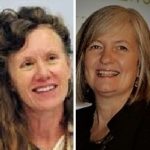
Anew WIHI Webinar, Reality Knocks with Reducing (Hospital) Readmissions, features: Patricia Rutherford, RN, MS, Vice President, Institute for Healthcare Improvement, and Leora Horwitz, MD, MHS, Assistant Professor, Internal Medicine, Yale University School of Medicine, two prominent women in public health. They discuss the issues we face when trying to reduce hospital readmissions, and the ways we can successfully accomplish this. Everyone seems to agree that this isn’t the time or place for any one approach; instead, multiple facets of different interventions need to come together to work as a whole if they are to be efficient. The hour-long discussion highlights the challenges, and praises work that has shown to reduce 30-day readmissions so far.


You can listen to the broadcast here:


http://www.ihi.org/knowledge/Pages/AudioandVideo/WIHIRealityKnocksReducingHospitalReadmissions.aspx


Key words:  IHI, readmissions, care transitions

Jul 252012
 
doctor_0

by Bebe Guill

I have mixed feelings about awards. I often think they don’t really matter – especially in cases where (as in many elementary school events these days) “everybody” gets one.  Awards programs often seem ubiquitous, self-serving, and ultimately meaningless. Sometimes, however, I think awards matter too much. I’ve been second, third runner up in piano competitions, in foot races, in writing contests, and even bottom of the heap in grants competitions, (with accompanying scathing critique), often enough to know the unique sting of “also ran.” Awards can encourage individual competition instead of much needed collaboration. Prizes can create a culture of exclusion rather than inclusion. After all, each time a single person is recognized, it means that countless other worthy individuals – and their worthy ideas and actions – are neither recognized nor especially encouraged.

But lately I’ve been convinced that awards really can matter. I believe this, because my friend, Andy Baxter, founder of the Cunniff-Dixon Foundation, keeps proving it with annual cash prizes recognizing “good doctoring” for  patients at end-of-life.

Created in 2005 in memory of Carley Cunniff and in recognition of Carley’s physician, Peter S. Dixon MD, the Foundation’s annual awards program recognizes that the experience that Carley and her husband (my friend, Andy Baxter ) had at the end of Carley’s life – a peaceful death at home with her family and loved ones – is one that occurs all too rarely. Determined to inspire and foster physician skills and virtues necessary to provide good end-of-life care more broadly, Baxter’s Foundation created an awards program.

In collaboration with The Hastings Center, the Foundation provides substantial financial prizes to those physicians, young and old, who have shown their care of patients to be exemplary, a model of good medicine, and a benefit in advancing the centrality of end-of-life care as a basic part of the doctor-patient relationship. To date, awards totaling $285,000 have been presented to senior, mid-career, and early-career physicians. And, as Baxter wrote (while on a plane back to New York after presenting 2012 awards to mid-career winner Dr. Michael Rabow in San Francisco and to early-career winner Dr. Jason Morrow in San Antonio), “The impact of these awards is simply going way beyond anything I think any of us envisioned. I have magic words: it works!”

Baxter’s elation is contagious. I’m captured not just by his exuberance, but also by his description of the significant ripple effect of the awards. Baxter is seeing hospital administrators more willing to provide financial or managerial support, or at least listen to new ideas, if they are put forward by “an award-winning” doctor. Award winner Justin Baker, MD, FAAP at St. Jude Children’s in Memphis, for example, reported that he was named head of the unit and got the OK on 2 FTE’s immediately after the announcement of his award, thus pushing St. Jude’s commitment to the public sphere.

In another example, Baxter cites senior award winner Dr. Janet Bull, chief medical officer and principal investigator of Four Seasons, a nonprofit hospice and palliative care organization that serves the Hendersonville and Asheville regions of western North Carolina. Dr. Bull is directing her entire $25,000 award to the Four Seasons Hospice sister organization in Zambia.

Awards programs that work do exactly what we see with Drs. Baker and Bull: they have a definitive ripple effect, affecting not just winners, but also leveraging their ideas, hopes, and passions for the benefit of others. For early-career physician winners, such as Savithri Nagaswaran, MBBS, DCH,MPH, director of the pediatric palliative care program at Brenner Children’s Hospital at Wake Forest University Baptist Medical Center in Winston-Salem, N.C., the awards instill confidence that can make a huge difference in an already promising career. As Baxter notes, “Physicians like Savi are really laying down the gauntlet for the future of this area of medicine. And believe me, these young [docs] get the ramifications of what they are doing in terms of medical economics and national policy. They plan to change the world and we are giving them even more confidence. “

Public recognition of people who are changing the world of care at end of life is an awesome venture.

It puts faces on what “good doctoring” at the end of life looks like. It gives me and others who care about improving healthcare for aging/advanced illness populations the ability to point and say definitively, “This is what it looks like – this is how it can be for you.”

In the scheme of things, the Foundation’s awards program is a relatively modest undertaking. As Baxter explains, “We do not have the financial resources of many other foundations. But our goals are lofty and meaningful, and we have passion about our endeavor. We believe that we can make a difference. “

And I believe that, too. These awards are making a difference. Yes, it’s an individual competition honoring physicians, and only a few are chosen each year. But the ripple effect creates broader impact. This year, the awards committee is especially interested in broadening the field of nominations to include not just palliative care or hospice docs, but also physicians in primary care, geriatrics, or other fields that address the needs of aging/advanced/chronic illness populations.

So spread the word – tell your friends, colleagues, patients and their family members to nominate a worthy physician. Post the announcement on Twitter and Tumblr and Facebook. “Good doctoring” needs to be recognized – who would you choose as your nominee?

Nominations for this year’s Hastings Center Cunniff-Dixon Physician Awards will be accepted through September 30, 2012.  There are five annual prizes totaling $95,000; one prize of $25,000 for a senior physician; one prize of $25,000 for a mid-career physician and three prizes of $15,000 for early-career physicians. Nominees must be licensed US physicians. Any individual or group- including professional associates, patients, and families – may submit nominations. Nomination forms and detailed instructions are available here: http://divinity.duke.edu/initiatives-centers/iceol

or

http://www.thehastingscenter.org/About/Default.aspx?id=4268&terms=cunniff+dixon+awards+and+%23filename+*.html


All inquiries and nominations should be directed to [email protected].

Bebe Guill is Consulting Program Director for CHAPI, the Collaborative on Healthcare for Aging / Advanced Illness Populations at the Health Sector Management program in the Fuqua School of Business at Duke University. She oversees The Hastings Center Cunniff-Dixon Physician Awards nomination process for The Hastings Center and the Duke Institute on Care at the End of Life. You can follow her on Twitter @bebeguill.


Key words: end-of-life care, physician awards, Hastings Center, Cuniff-Dixon Foundation, quality improvement

Jul 102012
 

Older residents (with fee-for-service Medicare) of a four-county region around Rochester, New York, are likely to benefit from the innovative programs being launched by a community-based care transitions project (CCTP) in that region. The “Community-wide Care Transitions Intervention” is anchored by Lifespan of Greater Rochester, a non-profit organization funded mostly by the Administration on Aging. The collaborative effort includes four acute care hospitals , two home health care agencies, and the regional independent health planning organization.

Of particular interest to MediCaring readers may be the involvement of the hospital pharmacist in this endeavor, which seems to be a key development to addressing the common problems of medication mismanagement. MediCaring talked to pharmacist Andrew Smith of Strong Memorial Hospital, and Brenda Bartock, RN, MPA, director of program development for Visiting Nurse Service of  Rochester and Monroe Co., Inc.

Smith explained that he receives a daily list of hospital admissions from which he selects the best candidates for the pharmacist intervention. The “best” candidates include those with what the program characterizes as an active Preventable Quality Indicator (PQI) diagnosis, or characteristics that put them at risk for re-hospitalization, such as comorbidities, polypharmacy, previous hospital admissions in the last year, or other risk factors such as living alone, absent social supports, or no transportation.  Smith then follows these patients during their hospitalization, meeting with them as soon as possible to discuss the enhanced hospitalization program and his availability to help them with medication. He will meet with them again near discharge, when he reviews medications with each patient (and family), focusing on what’s changed during the admission and what’s new, and letting them know that he is available to answer their questions. Using software called the Medication Action Plan, Smith gives patients an easy-to-read yet comprehensive medication list that they review together. He makes sure that prescriptions match insurers’ formularies and that schedules are workable for patients and family caregivers. Five days after discharge, he calls patients to follow up, making sure that they have not run into problems obtaining or using prescribed medications.

This is quite different from the usual process, in which there is no formal discharge planning with the pharmacist. Ordinarily, hospital pharmacists review what a patient has been prescribed during the stay, and not what was being used before the hospitalization. And although the pharmacist might occasionally see patients, that is not the norm.

Smith told MediCaring that, just three weeks into the program, he has seen some changes  being made. He offers services that the medical team often simply does not have time to address, such as helping patients to understand the need for a new medication and  helping them to reconcile pre-hospitalization medication routines with post-hospitalization routines.

Because the program was just launched in June, Smith says there has not really been an opportunity to see its effect on patients. He is not yet sure that the five-day follow-up call is the best timing. Smith also notes that the process enables him  to work more closely with physicians to develop medication management plans, providing doctors with information they welcome because it helps them to ensure that patients have workable routines.

According to Bartock, the pharmacy intervention helps to strengthen the program, and the case management it provides.  She says patients coming into the transitions program who have received the pharmacy intervention tend to be “in better shape than those who don’t have it.” In general, patients who are offered the intervention agree to participate in it. In just under three weeks, Smith says, he had seen approximately 20 patients.

Those interested in learning more about the Lifespan work can contact Mary Rose McBride at  585-244-8400, ext. 112 or  585-787-8376.

Key words: CCTP, care transitions, pharmacist, polypharmacy, frail elders, discharge planning

Mar 272012
 

From Dr. Joanne Lynn, Director, Center for Elder Care and Advanced Illness, Altarum Institute 

“Nothing about me without me!”  That’s the cry of the disability community and the AIDS community and so many others affected by health care dysfunctions.  But for the elderly, thus far, it has been acceptable for everyone else to shape the care system – the doctors, the drug companies, the Congress, the managed care companies, the care coordinators, and on and on. But where are the voices of the elderly?  When do we hear from the folks providing support and love for disabled elderly persons? 

We desperately need that voice.  Without it, we are prone to make decisions in the interests of the status quo or to prioritize myths and provider interests that don’t match what elderly people and their families most need.  The frail and ill elderly are only sometimes able to voice their own needs – but they mostly have family who love and support them, and those family caregivers can become the key to building an efficient and reliable set of supports and services.

Most of us are now or will be family caregivers – and now, most family caregivers are overwhelmed, unorganized, and voiceless.  We need to change that.  Family caregivers need to speak up on behalf of their elderly loved ones, and themselves, and push back on commonplace presumptions as to what matters most at this time of life.  But those of us who are not right now overwhelmed with care needs need to make it easier for family caregivers to have a voice!

That’s the point of our “Agitator’s Guide” (http://medicaring.org/action-guides/agitators-guide/). We’ve drafted up some specific things anyone can do—RIGHT NOW—to improve the lives of frail elders in your community.   We are looking for your advice.  Tell us what possibilities strike you as worthy.  Try one or two out, and let us know how it goes.  All of us aging persons need to weigh in on this and hit upon some acts that change the power of inertia – that is, “keeping doing what we’ve been doing” – which gets us nowhere.  If you are or have been a family caregiver to an elderly person, weigh in by responding to this blog or writing to [email protected]  – what would have helped you most?  Who could make that happen? 

The time for speaking out is now – we risk being overwhelmed with the costs and challenges of elder care as the numbers double. We must make services appropriate, reliable, and efficient.  Let’s try out some avenues and see what works!

key words: eldercare, advocacy, quality improvement, patient engagement